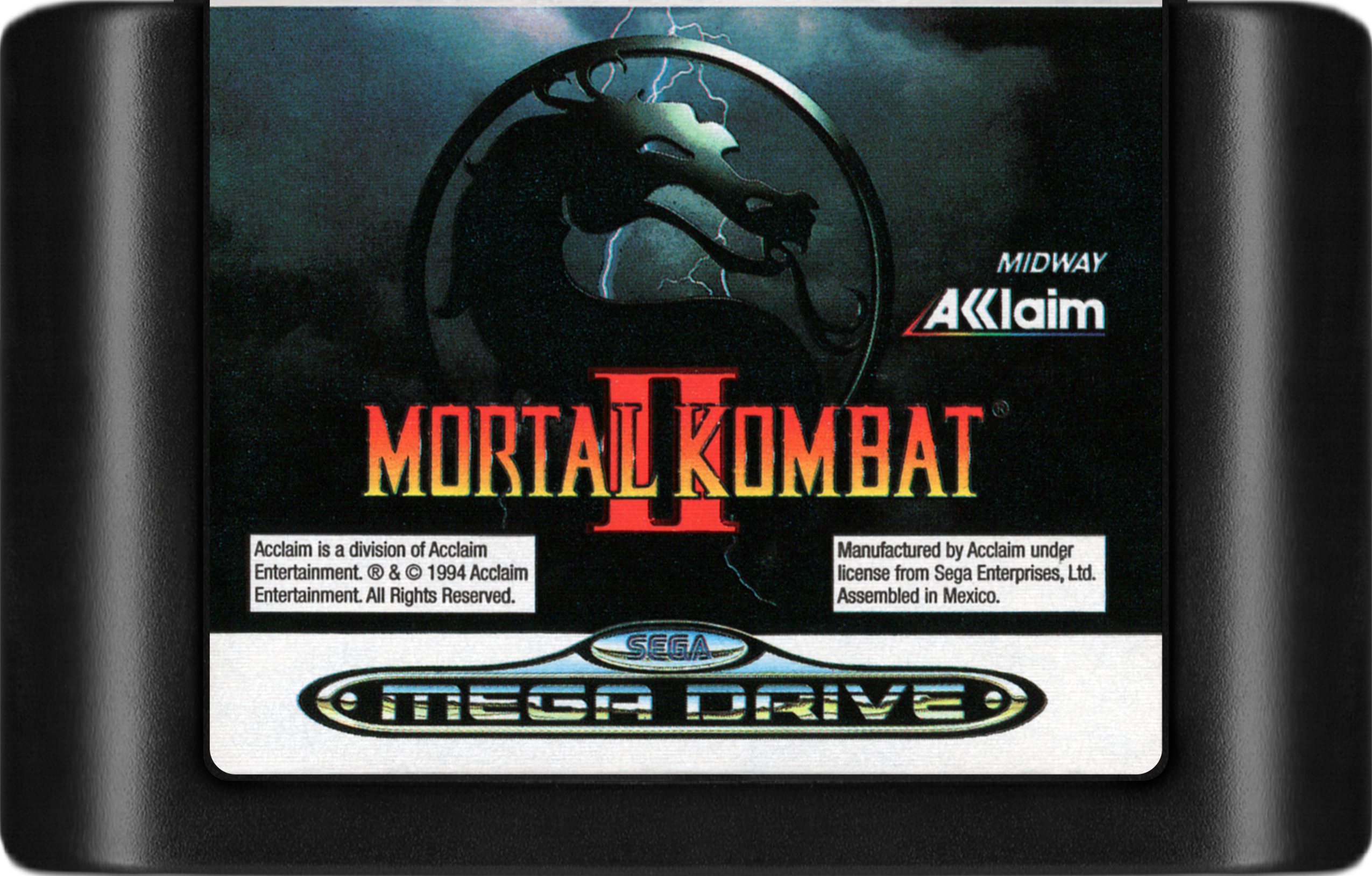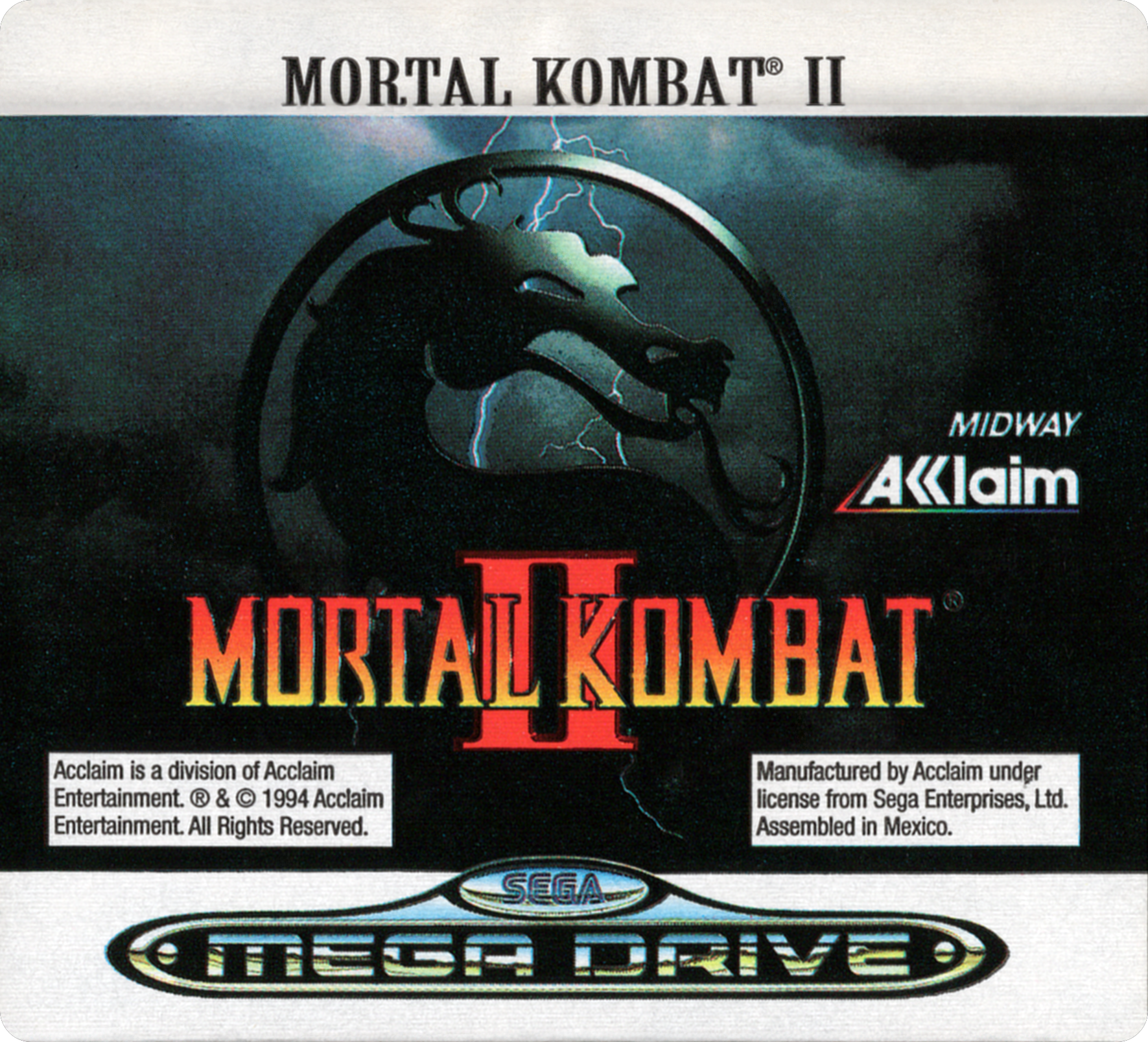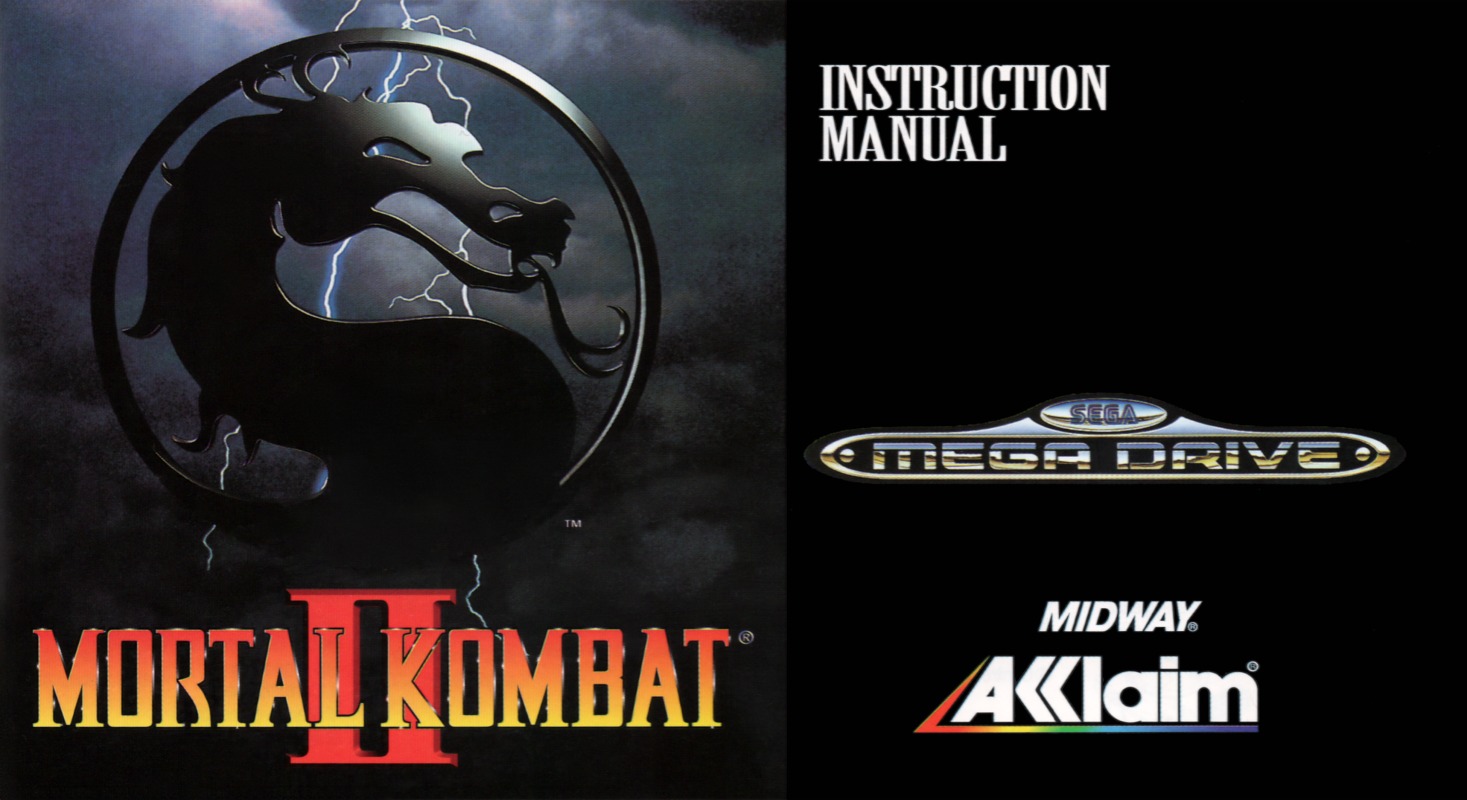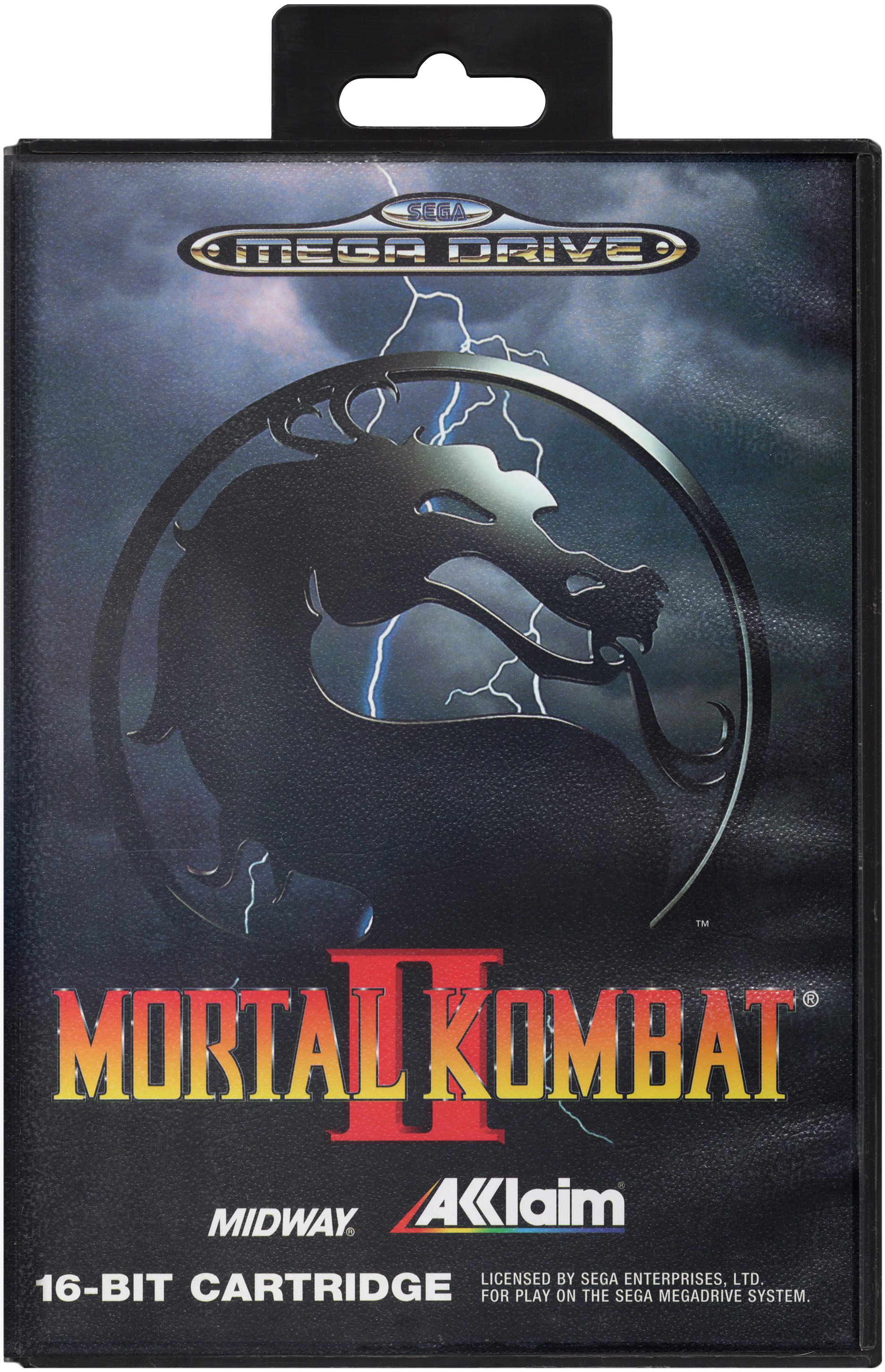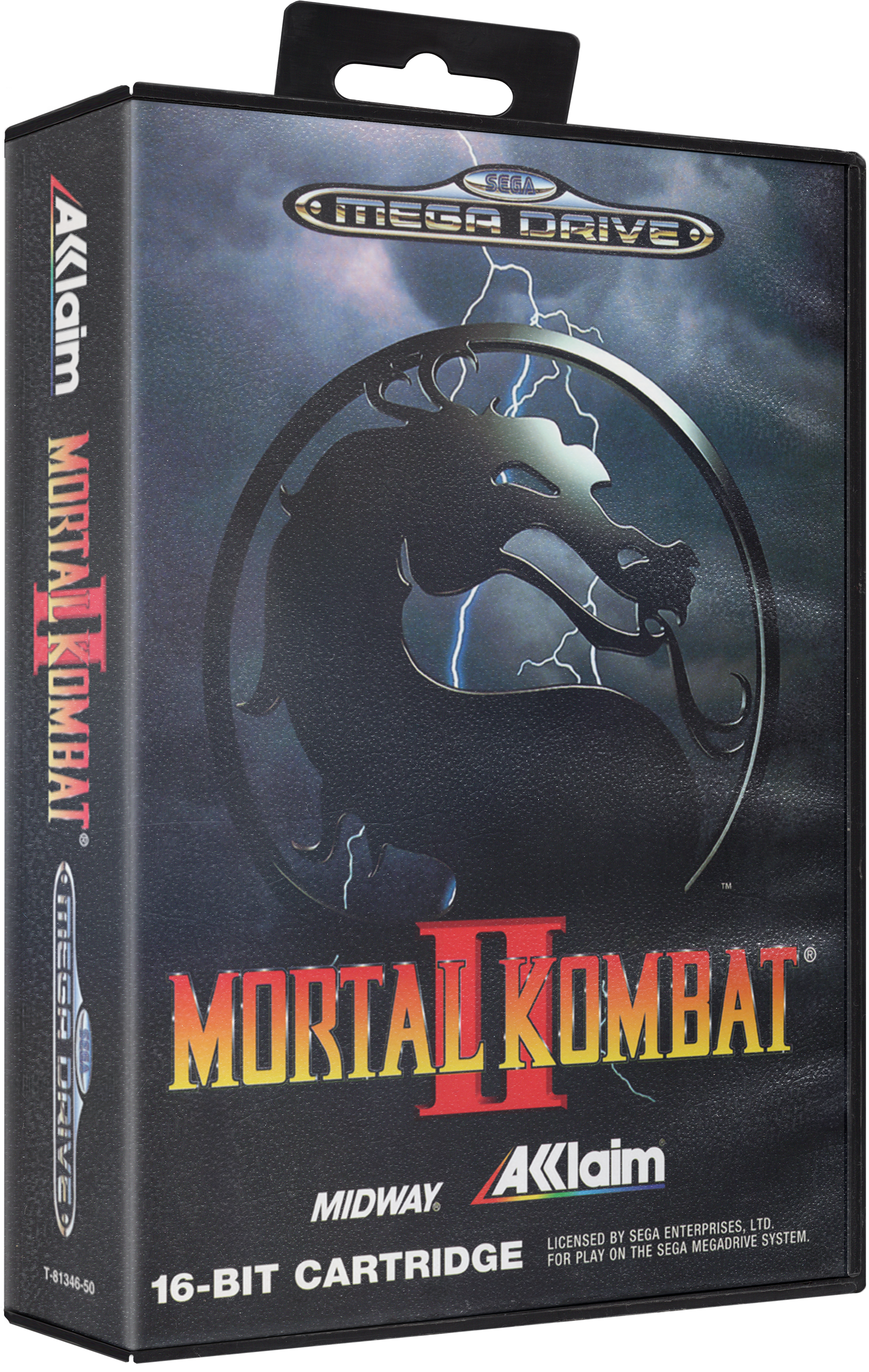
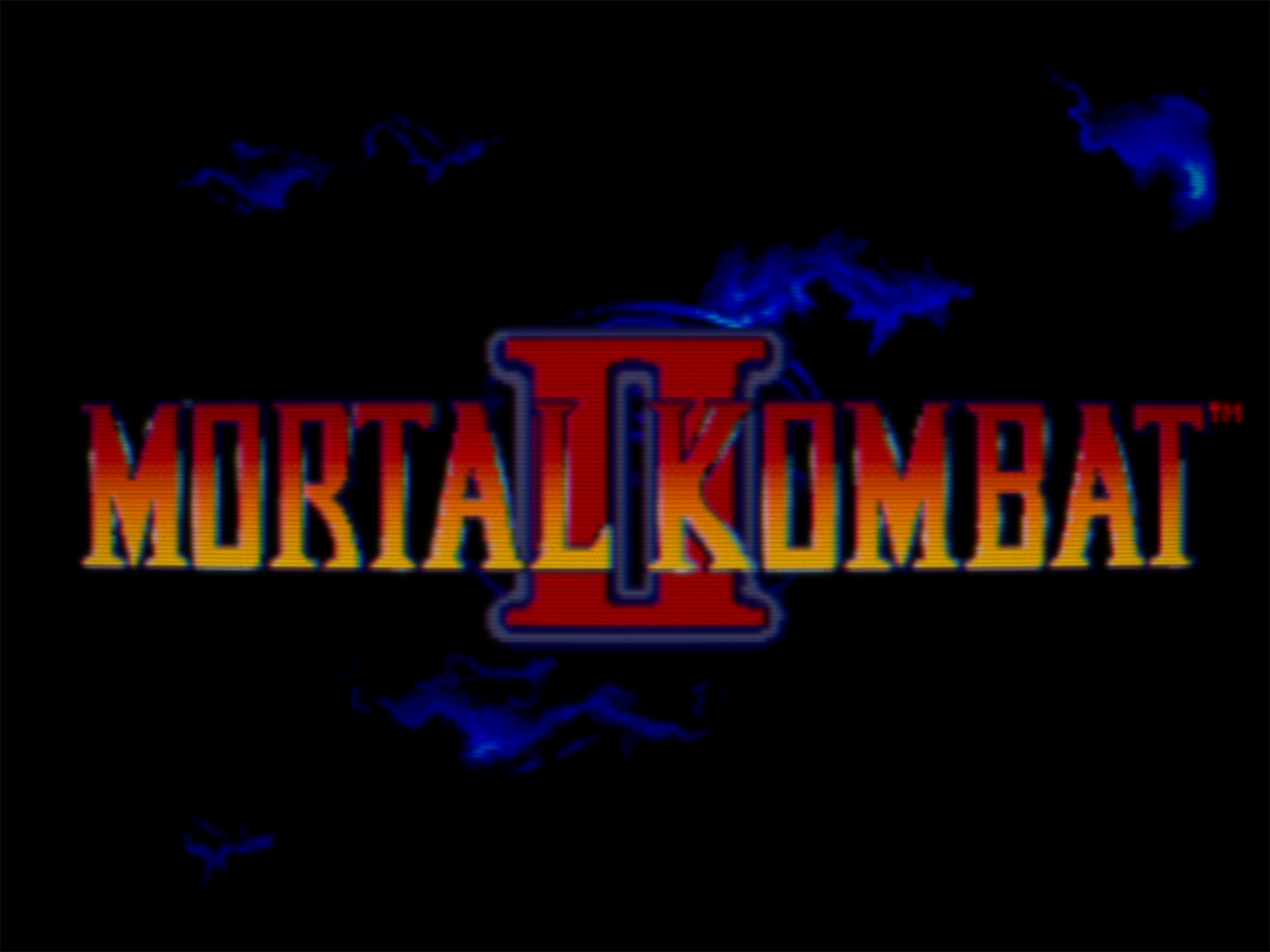
Shao Kahn is in charge now. Goro is dead. The Shaolin Tournament has been absorbed into the Outworld, and six of Earth's greatest fighters have been lured there under false pretences to fight for their lives against Kahn's finest. The stakes are higher, the roster is bigger, the backgrounds are richer, the finishing moves are more inventive, and the fatalities are considerably more creative about where the blood ends up.
Mortal Kombat II is a better game than its predecessor in every conceivable department. Whether it is the best fighting game on the Mega Drive is a question we will return to honestly, because honesty is what you deserve. But as a sequel that addresses its predecessor's weaknesses while amplifying everything that worked, it is close to a textbook example of how to do it.
What's different
If you played Mortal Kombat, most of the grammar here will be familiar. Digitised sprites, one-on-one rounds, the block button that distinguishes Mortal Kombat's system from Street Fighter's, the special moves triggered by directional inputs, the window at the end of a won bout where you can execute a finishing move. The structure is the same. What has changed is everything inside it.
Twelve playable fighters, up from seven. The original cast returns, minus Kano and Sonya who are referenced in the story as prisoners of the Outworld but absent from the roster, plus six newcomers: Kung Lao, a Shaolin monk who fights with a razor-edged hat; Mileena, who wears a mask and has the best surprise move in the game; Baraka, a grotesque Outworld warrior with retractable blades; Kitana, whose fan weapons can stun opponents for a killing blow; Jax, a special forces soldier with enormous arms and the ability to wipe the floor with his face; and Reptile, a lizard-man who can turn invisible and fire acid from his mouth. Shang Tsung is back, and he now has the ability to morph into any of the other twelve fighters mid-bout and use all of their moves, which makes him simultaneously the most interesting and most unfair character in the game. The sub-boss is Kintaro, a four-armed tiger-striped replacement for Goro who hits even harder and has somehow been angrier about it. The final boss is Shao Kahn himself, who will bellow insults at you in between trying to remove your head.
The variety in the roster is substantially better than the first game. Every character has a distinct enough toolkit that your choice matters, and the matchups between specific characters have genuine depth to explore. Liu Kang's flying kick still covers the screen. Raiden still teleports. Sub-Zero can now freeze the ground beneath an opponent, sending them sliding helplessly across the rink and into whatever you have waiting for them on the other side, and it is one of the more satisfying things this game has to offer.
Fatalities, Friendships, Babalities
The finishing moves are, predictably, the part of Mortal Kombat II that everyone will talk about first and the part that will eventually be the least important reason to keep playing. The Fatalities are more elaborate than anything in the first game: Kung Lao bisects people with his hat, Kano rips spines, the results are extravagant and specific to each character, and the designers have clearly had a great deal of fun working out exactly how many different ways the human body can be messily dispatched. If this is your primary reason for wanting the game, you will not be disappointed.
But Mortal Kombat II has also added two finishing move alternatives that take the piss out of itself in exactly the right way. A Babality turns your defeated opponent into an infant, complete with nappy, sitting on the floor looking confused. A Friendship has your character produce a bunch of flowers, a skipping rope, a birthday cake, or some similarly incongruous peace offering. Both require specific conditions to execute (the second round must be won using only kicks, and the distance between the characters has to be right), and landing either is genuinely satisfying in a completely different register to the gore. They are, in their own silly way, as entertaining as the Fatalities, and they demonstrate that the people who made this game were perfectly aware of how absurd it was.
How it plays
This is where we need to have a slightly more complicated conversation than most reviews of Mortal Kombat II are willing to have.
The game is excellent. It is faster than Mortal Kombat, with smarter AI, deeper matchups, more complex special moves to master, and a roster varied enough that learning a second or third character is genuinely worthwhile rather than redundant. The two-player mode is absorbing in exactly the way that good fighting games are: you can play it for hours without the session feeling long, because every fight has something different in it, and because the choice of character opens up different problems and solutions. As a game about two people trying to hit each other, it does what it sets out to do very well.
But here is the honest version: Street Fighter II': Special Champion Edition is still the better pure fighting game on this console. The inputs are tighter, the system is deeper, the matchup knowledge takes longer to develop, and the mechanics reward precision in a way that Mortal Kombat II's slightly looser engine does not quite match. MKII's projectiles pass through each other rather than colliding (a deliberate design choice to prevent the defensive fireball wars that SF2 sometimes devolves into, but one that changes the tactical texture of neutral play significantly), and while the block button creates its own interesting layer of decision-making, the overall system has a slightly different relationship with depth and execution than Capcom's game.
None of this means Mortal Kombat II is a lesser achievement. It means it is a different kind of fighting game, one that prioritises spectacle, character variety, and finishing move mastery alongside the fighting itself. Whether you prefer it to Street Fighter II is a question of temperament as much as taste, and both positions are defensible. The people who will tell you MKII is the greatest fighting game ever made are not wrong that it is a great fighting game. They are, perhaps, more invested in the specific flavour of greatness it offers than in the precise comparison.
How it looks and how it sounds
Probe Software's conversion work is, to put it plainly, the best coin-op conversion on the Mega Drive. The sprites are large, well-animated, and recognisable as their arcade counterparts. The backgrounds use parallax scrolling (where layers of scenery move at different speeds to simulate depth, like looking out of a moving vehicle) with a richness that the Mega Drive hardware handles impressively. The dead pool stage, with its acid below. The living forest with its screaming trees. The portal stage with its swirling skies. All of them are here, all of them look the part, and none of them feel like they have been significantly compromised in translation.
There are concessions. The graphics are not quite as rich as the SNES version: some colour detail has been trimmed and the sprites have been very slightly reduced. The difference is genuinely negligible once you are actually playing rather than performing a side-by-side comparison, and the concession is worth noting only so you know it exists.
More interesting is a specific detail in the presentation that tells you something about what Probe were working with. The original arcade version of Mortal Kombat II features a small digitised image of a programmer's face appearing in the corner of the screen to say "Toasty!" when a particularly good uppercut lands. The Mega Drive, lacking the memory bandwidth to cleanly reproduce a small photographic image at that scale, could not replicate it faithfully. The solution Probe reached was to redraw the face as a black and white sprite. It is a small thing, functionally irrelevant, but it is the sort of detail that marks the difference between a conversion that treats the source material with care and one that simply deletes anything that causes difficulty.
The sound is handled by Matt Furniss and Shaun Hollingworth, and it is the best-sounding version of Mortal Kombat II on a home console at the time of release. The speech samples are crisp and present, the impact sounds are meaty, and the music carries the dark, oppressive atmosphere of the Outworld convincingly through the Mega Drive's FM synthesis chip. The original arcade sound is slightly richer, as it always is, but the distance between the arcade and this conversion is smaller than in almost any other Mega Drive port of a coin-op game. Furniss and Hollingworth have understood the hardware and made it work for the material.
Scorpion will tell you to "GET OVER HERE" at regular intervals. This is correct and appropriate.
The hidden roster
Three characters exist in Mortal Kombat II beyond the twelve on the selection screen, and their presence is one of the game's best-kept and worst-kept secrets. Noob Saibot, a shadowy figure and the fastest fighter in the game, is a grey-clad variant of the Reptile, Sub-Zero and Scorpion sprite. Jade is a green-clad variant of Kitana and Mileena's sprite. Smoke is a grey variant of Scorpion's sprite. All three appear in the Living Forest background as cameo appearances and can be triggered as opponents through specific conditions. Noob Saibot's name is an amalgamation of the surnames of Midway's top developers Ed Boon and John Tobias, reversed. They know exactly what they are doing.
The verdict
Mortal Kombat II is the finest coin-op conversion on the Mega Drive and one of the best fighting games on the system. The roster is varied and deep, the finishing moves are genuinely creative in both their violence and their absurdity, the two-player mode is as addictive as anything in the genre, and Probe Software's conversion work is a genuine technical achievement. If Mortal Kombat was a statement, this is the argument won.
It is not, in our honest assessment, a better pure fighting game than Street Fighter II': Special Champion Edition. The Capcom game is more technically precise and its system rewards execution more directly. What Mortal Kombat II offers instead is breadth: more characters, more finishing move variety, more spectacle, a darker and stranger world to fight in, and a two-player experience that is different enough from Street Fighter's to justify owning both.
Buy this game. Buy the six-button pad you should already have. Learn Shang Tsung. Practise the Babality inputs. Find out what Kintaro does to people who jump at him from a distance.
You are not ready for Shao Kahn, but you will be eventually.
In hindsight
The original Mortal Kombat trilogy, the three games that ran from 1992 to 1995, split opinion at the time and continues to do so. The series was always about more than the fighting system underneath it: the digitised aesthetic, the mythology, the finishing moves, the secrets, the sheer scale of the cultural moment it occupied. Judged purely as a fighting game, the debates between Mortal Kombat and Street Fighter partisans have never been fully settled, and they probably never should be, because they are genuinely different games doing genuinely different things.
Within the trilogy itself, Mortal Kombat II is the game that most people point to as the peak. Mortal Kombat 3, which followed, introduced a run mechanic and further roster changes that divided the fanbase. The original Mortal Kombat has the benefit of shock and novelty. MKII sits in the middle, expanding the formula while it was still fresh, before the series' appetite for self-replication had begun to show. If you were to play one game from the original trilogy today, most people who were there would send you to this one.
The Probe Software conversion deserves its own paragraph, because it was not taken for granted at the time and should not be taken for granted now. Probe handled both Mega Drive Mortal Kombat conversions, and the improvement between the first and the second is significant. The backdrops are richer, the sprite animation is smoother, the sound is better, and the overall sense that you are playing something as close to the arcade as the hardware will allow is stronger throughout. Probe were one of the most capable conversion houses of the era, and Mortal Kombat II on the Mega Drive is the best argument for that reputation.
The Toasty! sprite compromise is the kind of detail that the preservation community tends to document and the casual player never notices. It is worth noting here precisely because it exemplifies what an honest conversion looks like: Probe encountered a technical problem, found a solution that preserved the intent of the original moment without simply deleting it, and shipped a product that respected the source material within the constraints available. The black and white sprite is not as good as the digitised face. It is, however, there, which is the difference that matters when you are trying to capture a game completely rather than approximately.
The Nintendo situation, for context: by the time of Mortal Kombat II, the censorship battle that had defined the first game's release had shifted. The SNES version of MKII included blood, which the original SNES Mortal Kombat had famously removed. The console war argument that the first game had handed to Sega so cleanly was no longer available in the same form. What remained was a straight fight between two competent conversions of the same game, and that fight, on the evidence of the final products, the Mega Drive won on points.
 Codex Essential Game