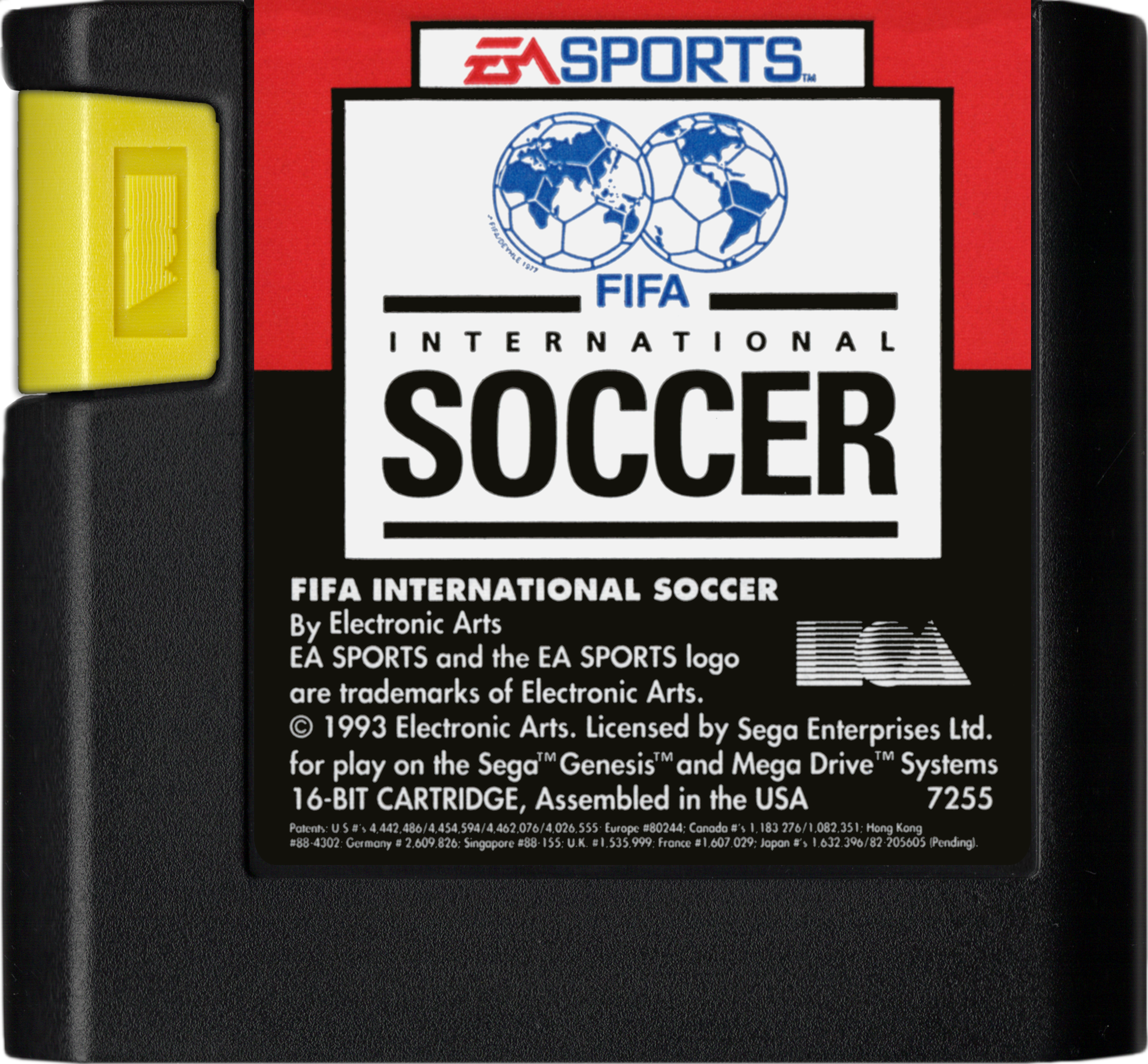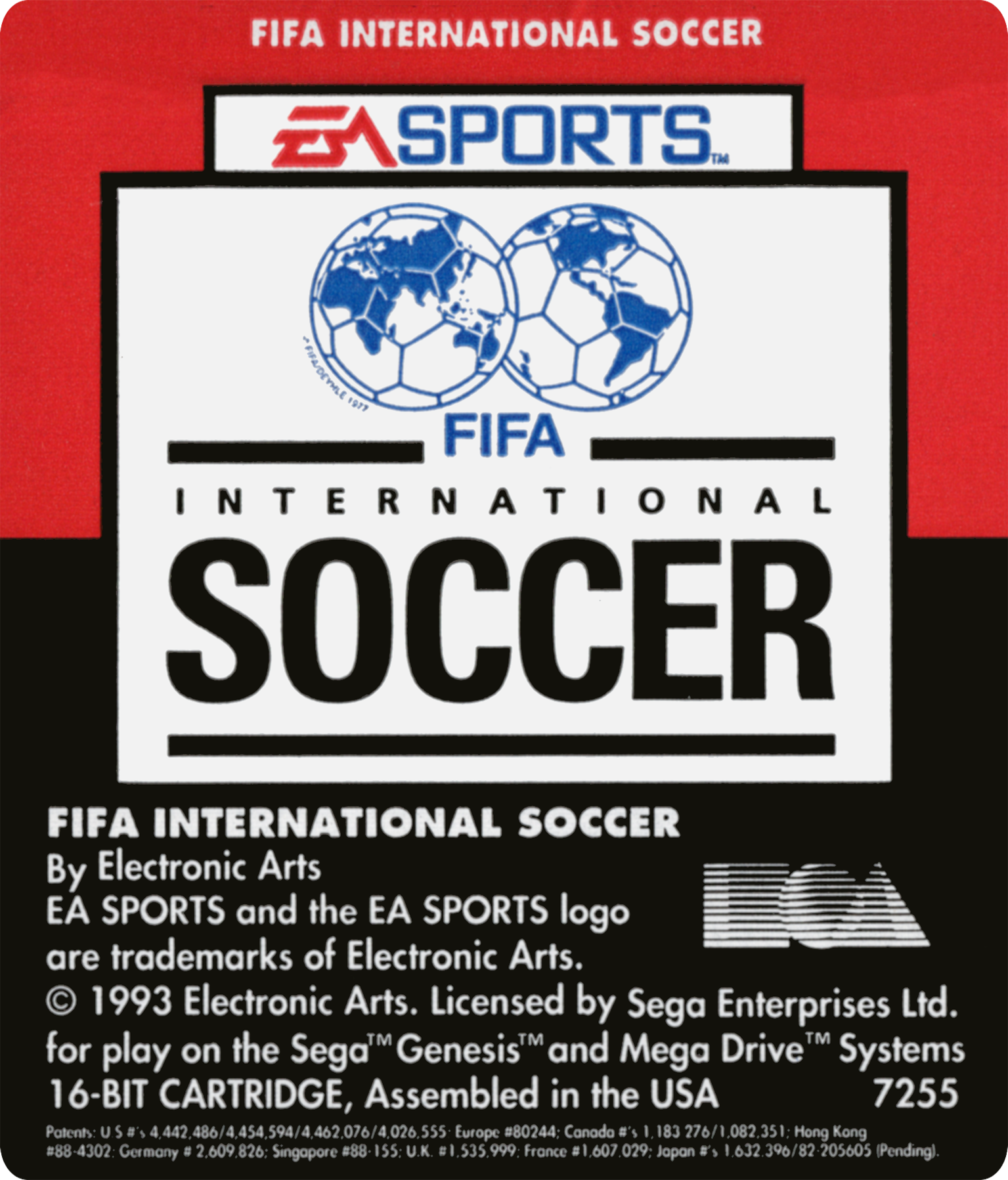
FIFA International Soccer
Codex Essential — Gold
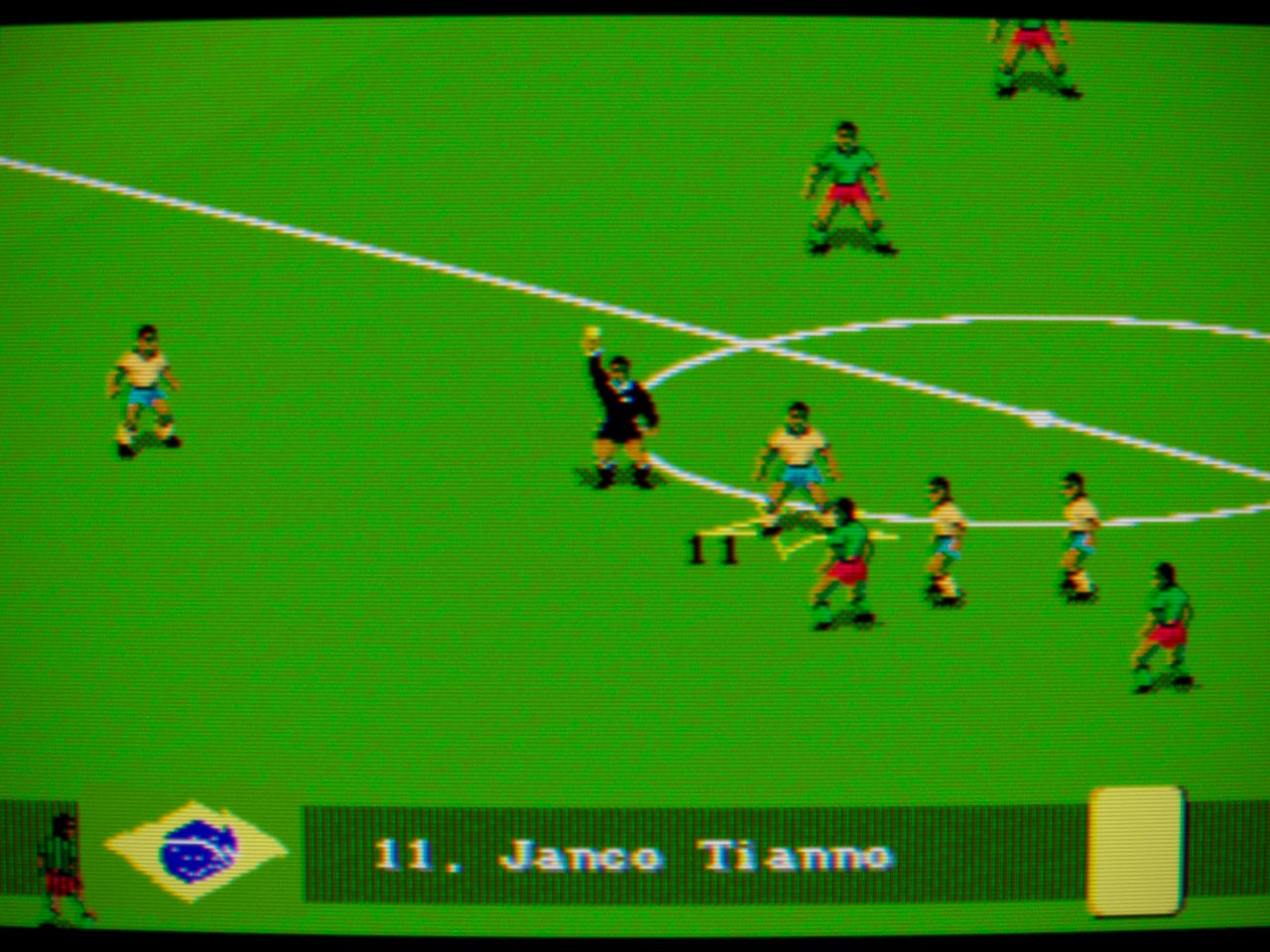
Electronic Arts have spent years teaching the Mega Drive American sports. They made us care about gridiron. They made us care about ice hockey, a sport most of Britain watches twice a decade. Now they have turned their attention to the one game this country invented and thinks it owns, and the obvious question is whether a company that calls it soccer can be trusted with football.
It can. FIFA International Soccer is the best-looking football game ever put on a home console, and underneath the looks there is a game good enough to keep a living room full of mates arguing until the early hours.
A view from the stands
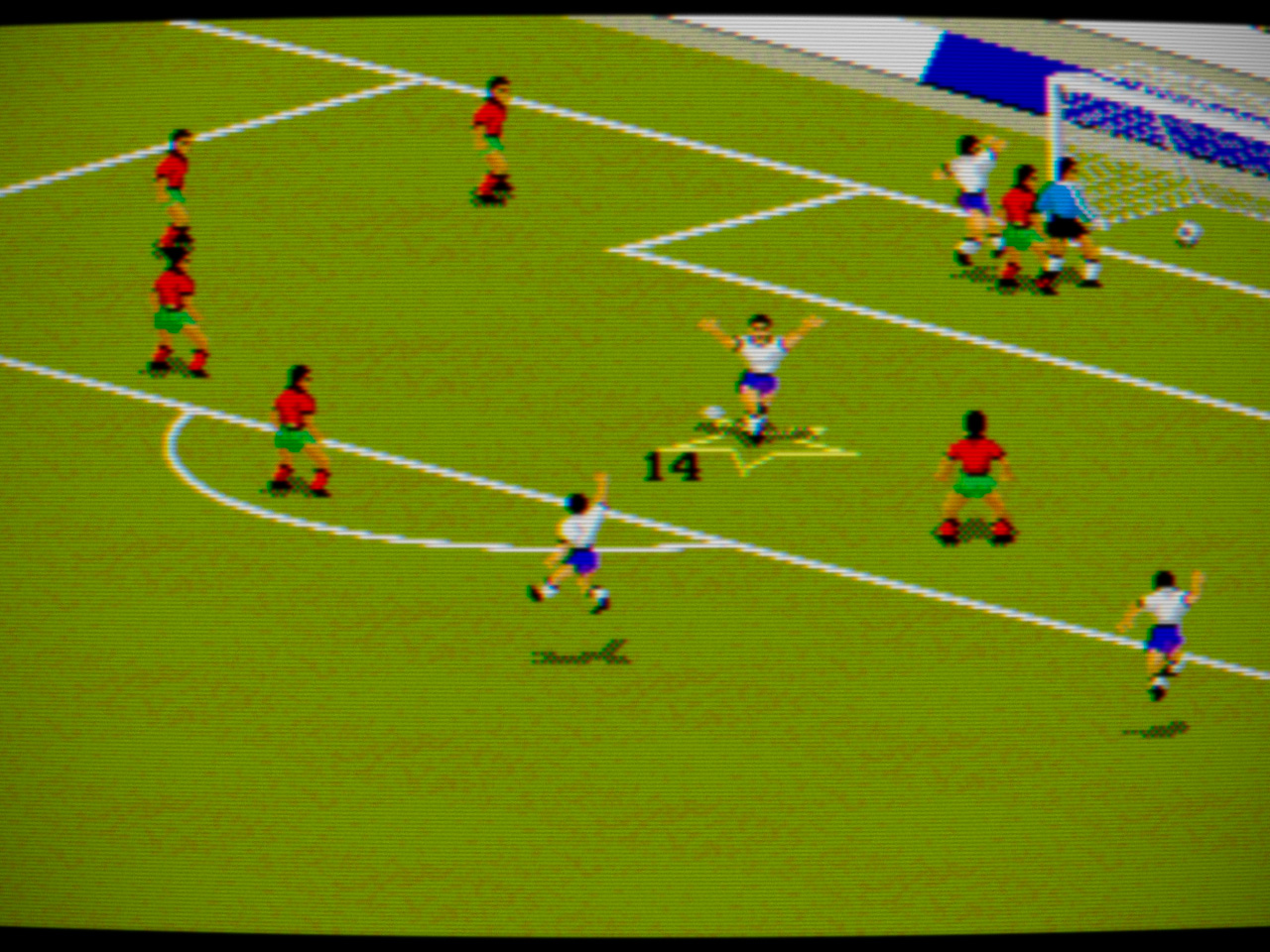
The first thing you notice is the angle. Football games on this machine have stuck to two views: straight down from above, like a tactics board, or from behind the goal. EA have done neither. The pitch here is drawn at a diagonal, viewed from high up in one corner of the stadium, so the touchlines run away from you at an angle and the far stand rises behind the play.
The technical term is isometric (a fixed three-quarter view that shows depth without true 3D, the way an architect draws a building at an angle). It sounds like a gimmick. It is the best decision in the game. You can see down the length of the pitch to the far goal, nobody is hidden behind the netting at the bottom of the screen and long balls are easy to read as they come in.
The screen scrolls to keep the ball in the middle, and there is no radar. When the player you are controlling wanders off screen, an arrow at the edge points to where he is.
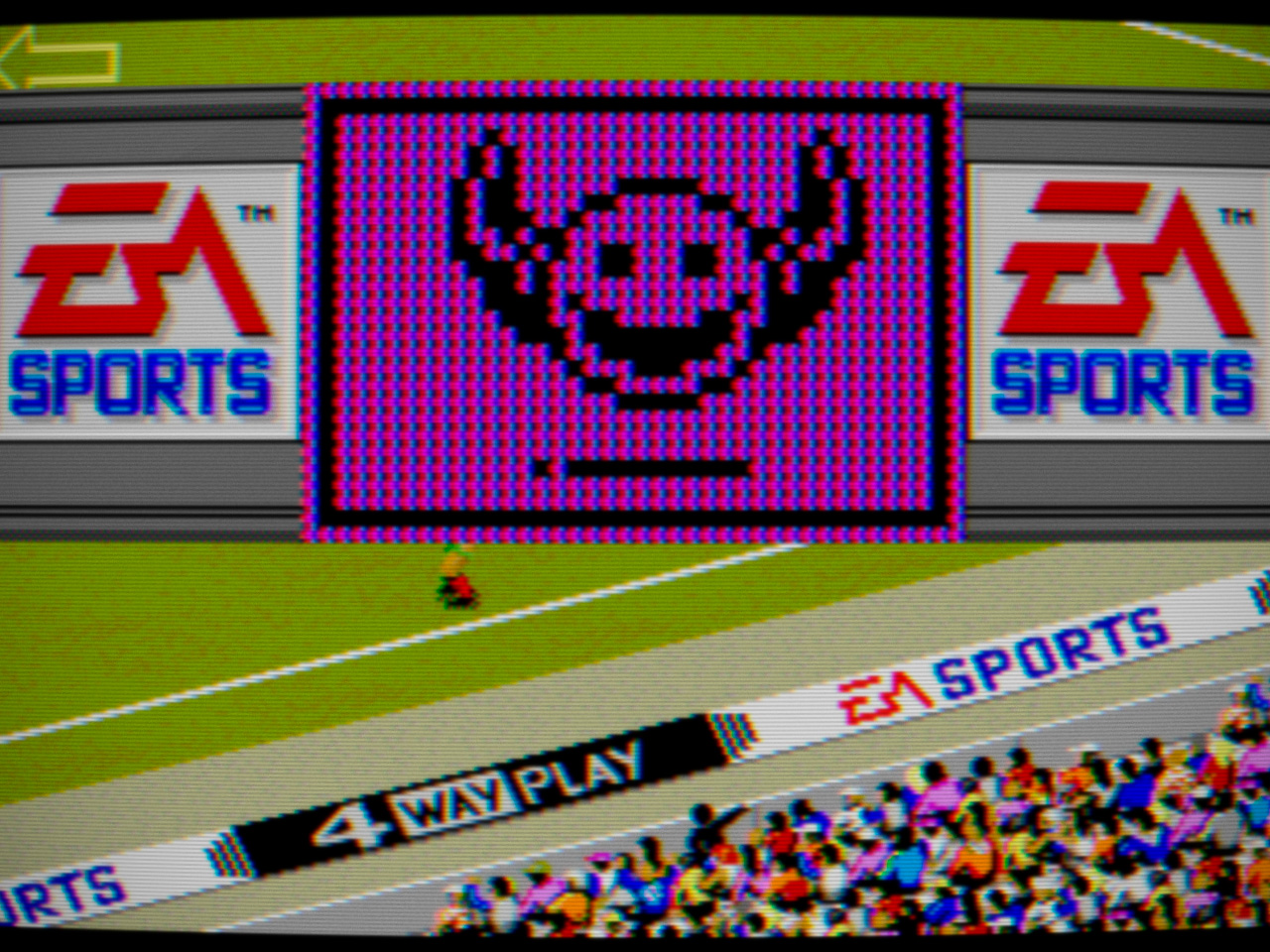
It also looks like football on the telly. The sprites are big, the animation is fluid and the players behave like footballers. They slide in, they dive, they roll about clutching a shin after a late tackle and then jog off the moment the referee has shown the card. Score and the team goes mad, with handstands and somersaults, while the stadium scoreboard plays a little dot-matrix cartoon of its own.
On the ball
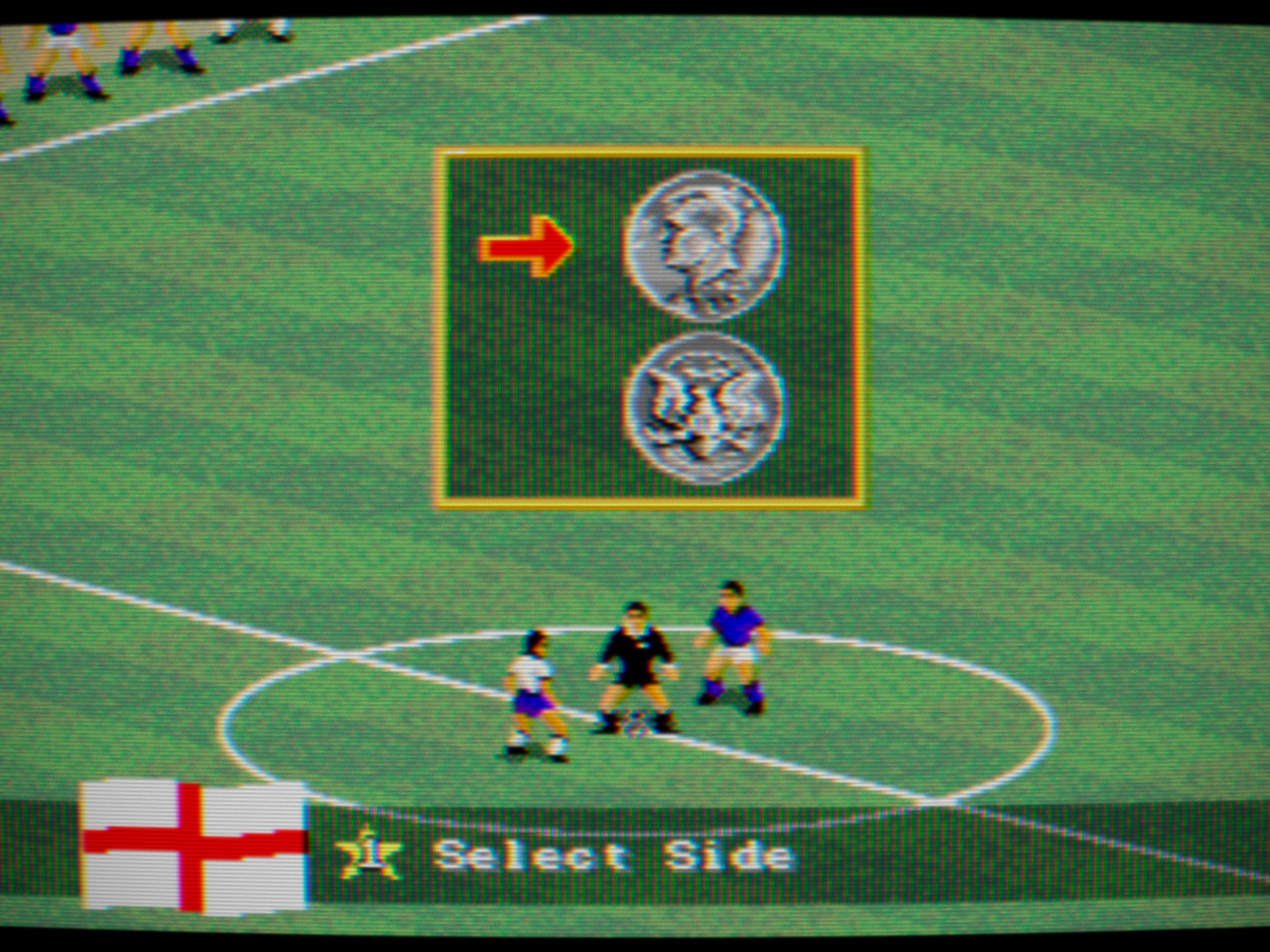
The controls start simple. With the ball, one button passes, one shoots and one lobs. Without it, the same buttons tackle, slide in and switch you to another player. The player you control has a star under his feet so you can find him in a crowd.
What makes it clever is what happens around those buttons. The game reads the situation and picks the move for you, which is called context-sensitive control (the same button does different things depending on where the ball is and how your player is standing). A ball dropping at head height becomes a header. A ball dropping behind you becomes an overhead kick. Hit shoot as a cross comes in low and your striker throws himself at it with a diving header. The first time you score with a bicycle kick you will stand up and shout at the television, which is what a football game is for.
There are two styles of play, action and simulation. In simulation the players tire as the match goes on, so the legs that were flying in the first half are dragging in the second.
Dead balls
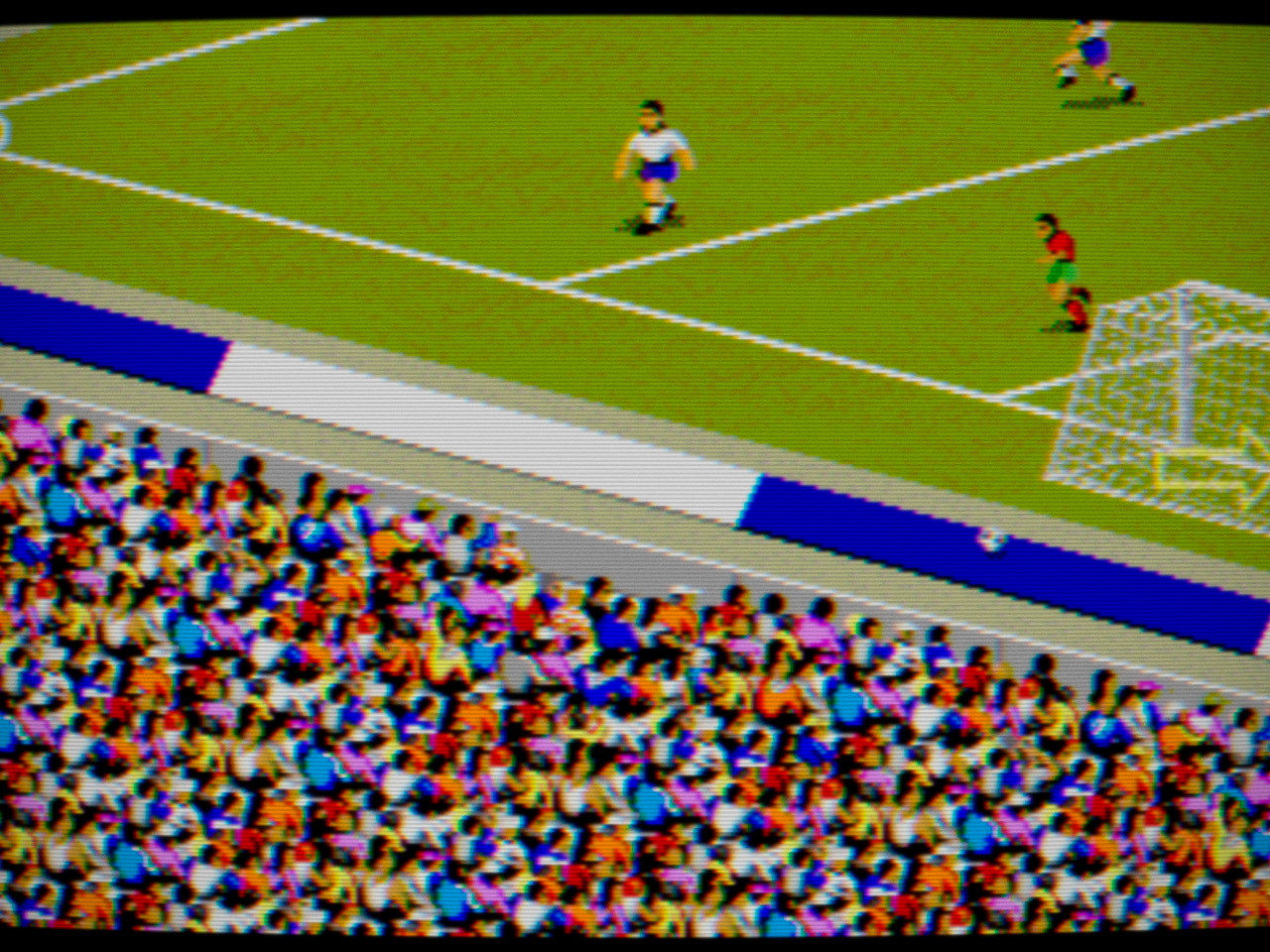
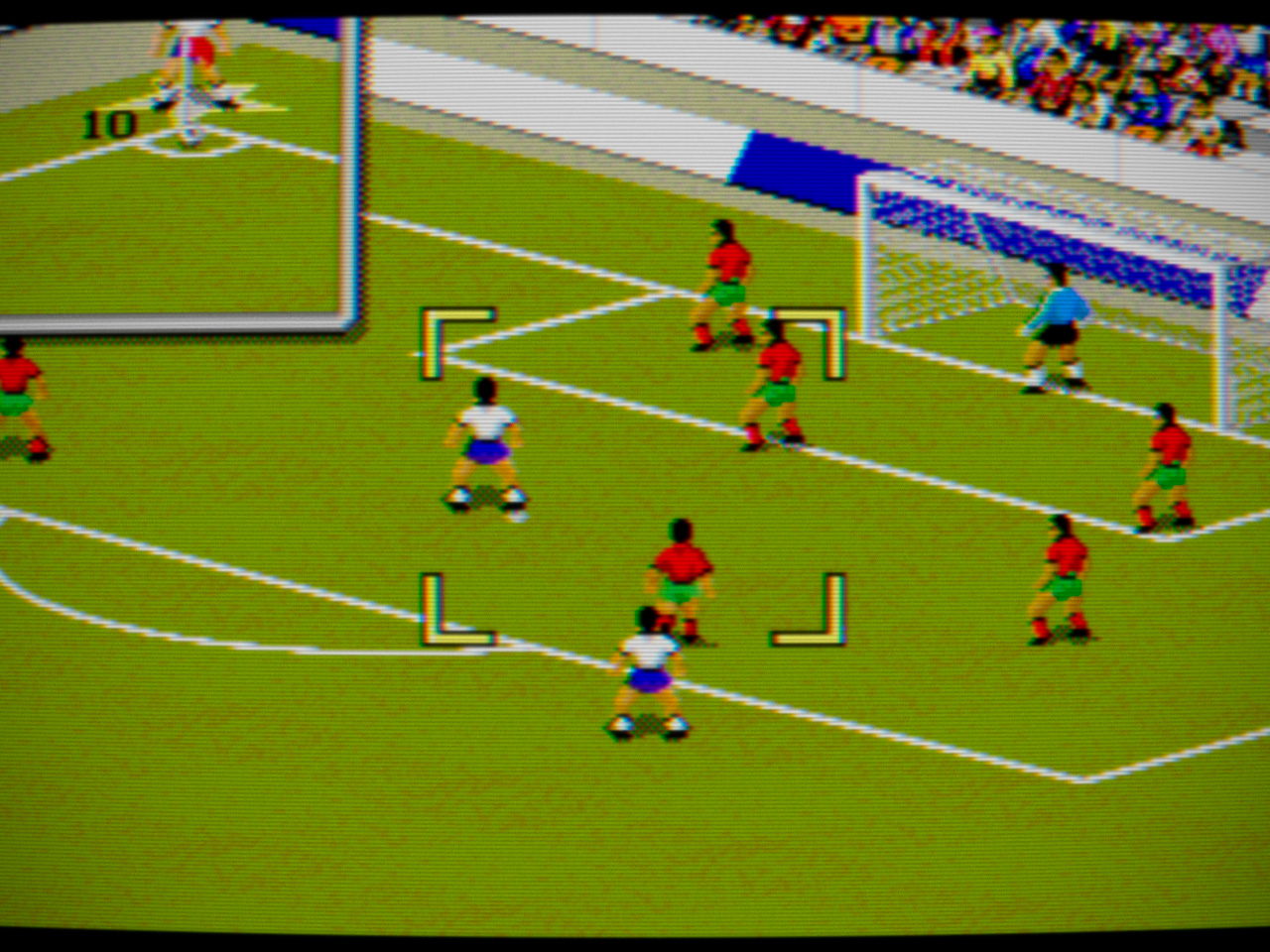
Set pieces get their own system. When the ball goes out for a corner, goal kick or throw-in, or the referee gives a free kick, a yellow target box appears on the pitch. Steer it to where you want the ball to land and kick. It gives you control over a corner without asking you to judge a cross by eye, and it turns set pieces into a chance to create something instead of a pause in play.
Goalkeepers can be left to the computer or handed to you. Leave them to the computer for a sensible match. Take them yourself if you fancy a laugh and a scoreline in double figures.
Book 'im, ref
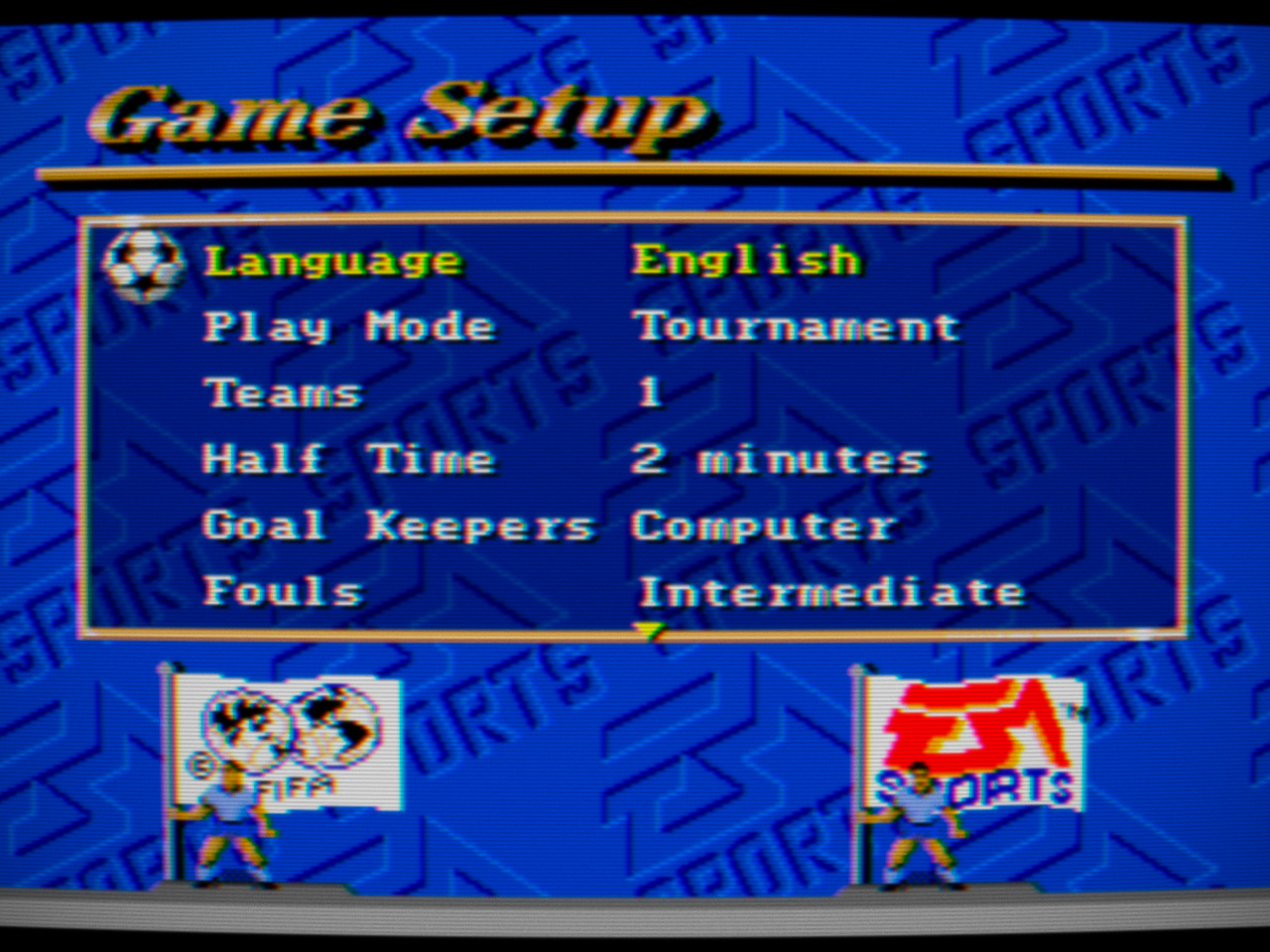
There are fouls, and the referee notices them. You decide how strict he is: fouls off, or one of two levels, with the higher setting bringing more bookings and the occasional red card. Shove a defender in the back at a corner, or arrive late with a slide, and the whistle goes. Offside is optional too. Switch it off for a faster, looser game.
The rest of the setup is yours as well. Matches can run from a few minutes to the full ninety, you pick the weather and you choose between grass and an artificial surface. If you want a quick game before tea, you can have one.
In the dugout
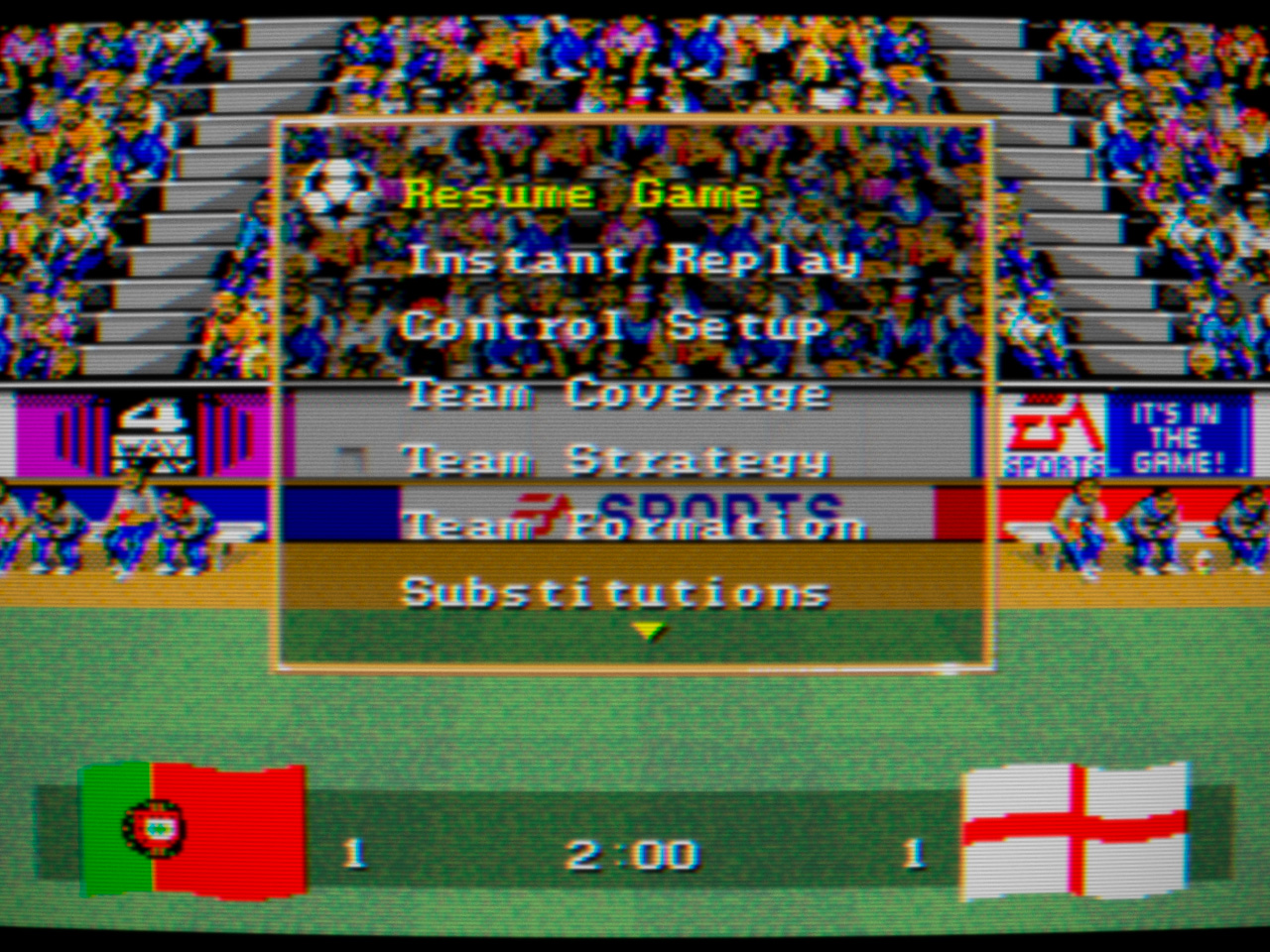
Behind the action sits a full management layer. Each squad has 22 players, each rated in thirteen areas, from speed and stamina to bicycle kicks and aggression. You set the formation, from 4-4-2 and 3-5-2 to a sweeper system for those with continental tastes. You set the strategy, from all-out defence through to all-out attack, with a long-ball option for anyone who learnt their football watching Wimbledon. You can drag the bands that show how far up the pitch your defence, midfield and attack will push. Two substitutions per match keep tired legs fresh.
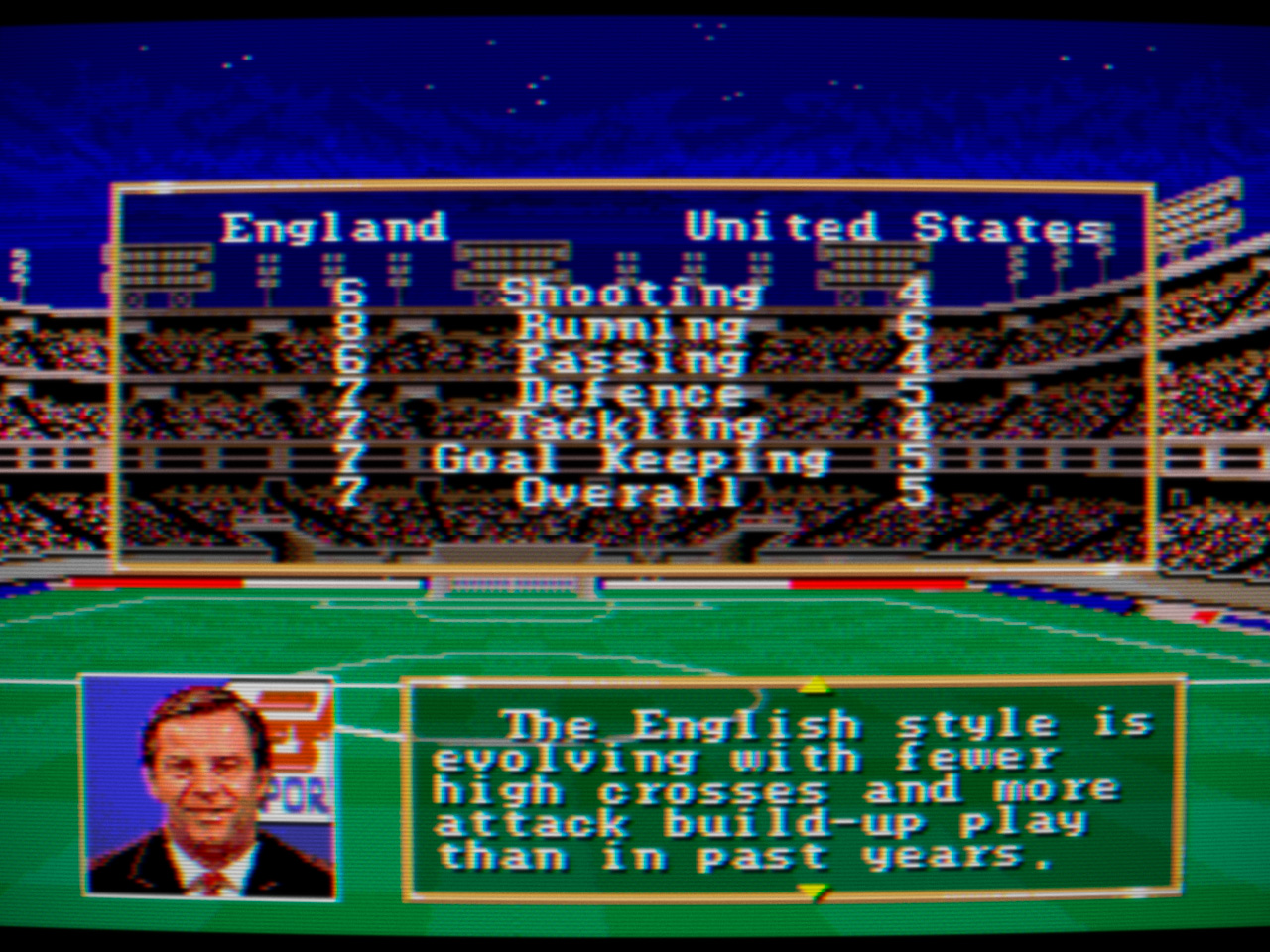
Ron Barr, EA's own presenter, introduces each match with a run-down of how the two sides compare on shooting, running, passing, defence, tackling and goalkeeping. It is useful information before you send New Zealand out against Brazil, and Ron delivers it with the air of a man about to sell you a toaster.
Four on the sofa
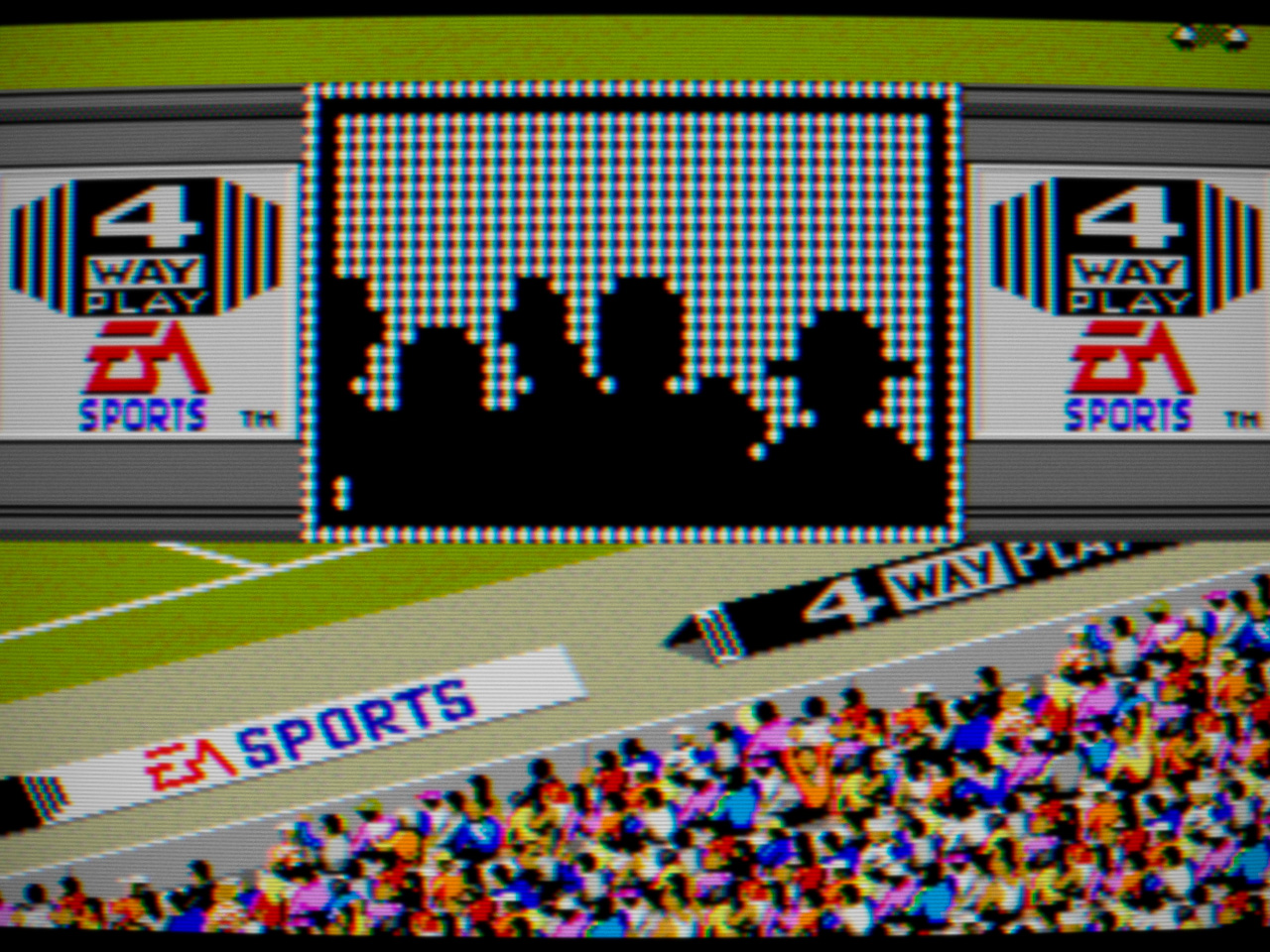
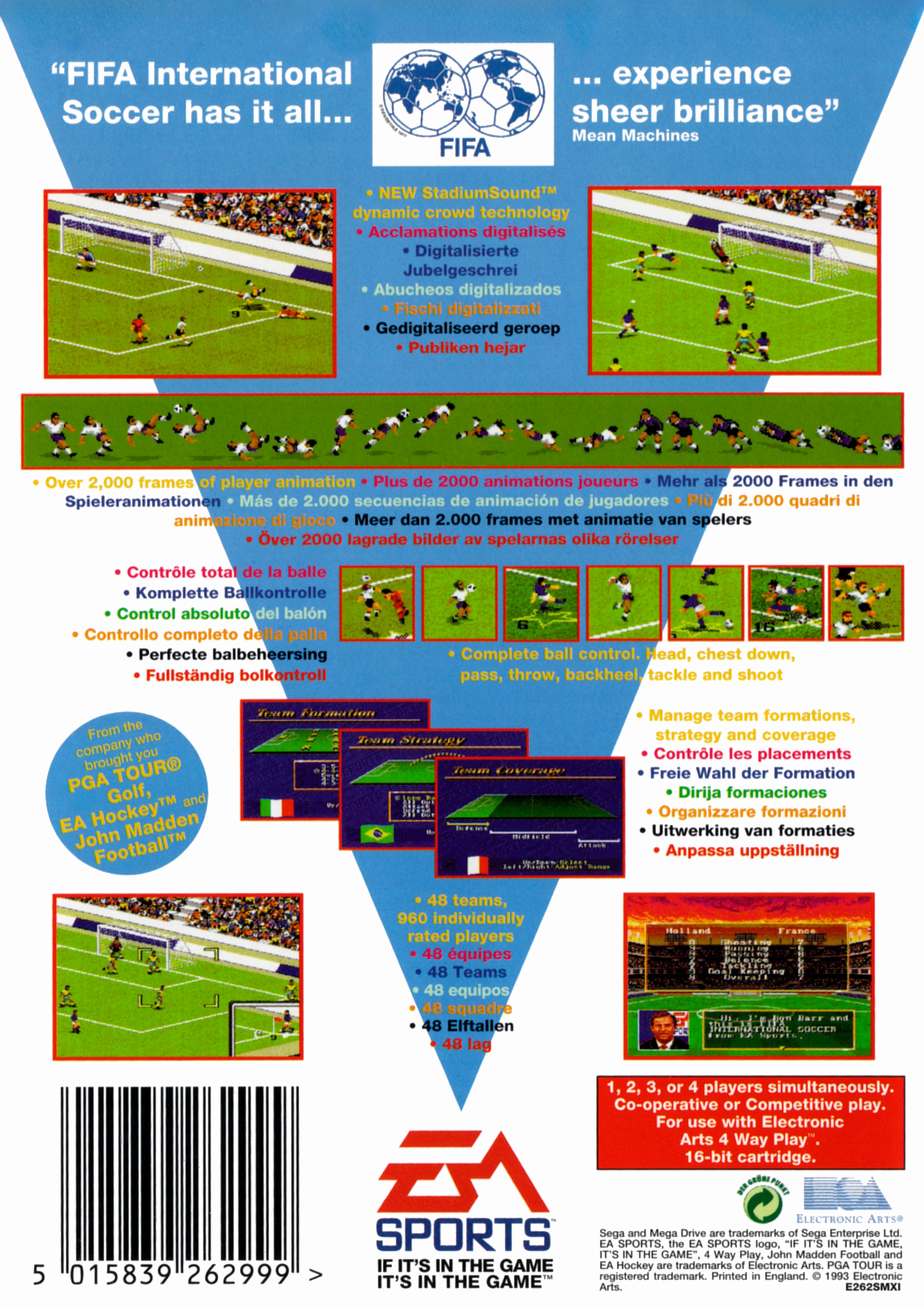
Plug in EA's 4-Way Play adaptor and up to four people can play at once, in any combination: two against two, three against one, or all four against the computer. Each human player gets their own colour of star.
This is where FIFA comes alive. One player against the computer is a good game. Two against two, with everyone shouting at each other over missed passes, is the best football you can play without a pair of boots. Four stars swapping between players is a lot to keep track of, and the first few matches are chaos. Nobody will care once the first goal goes in.
Competitions
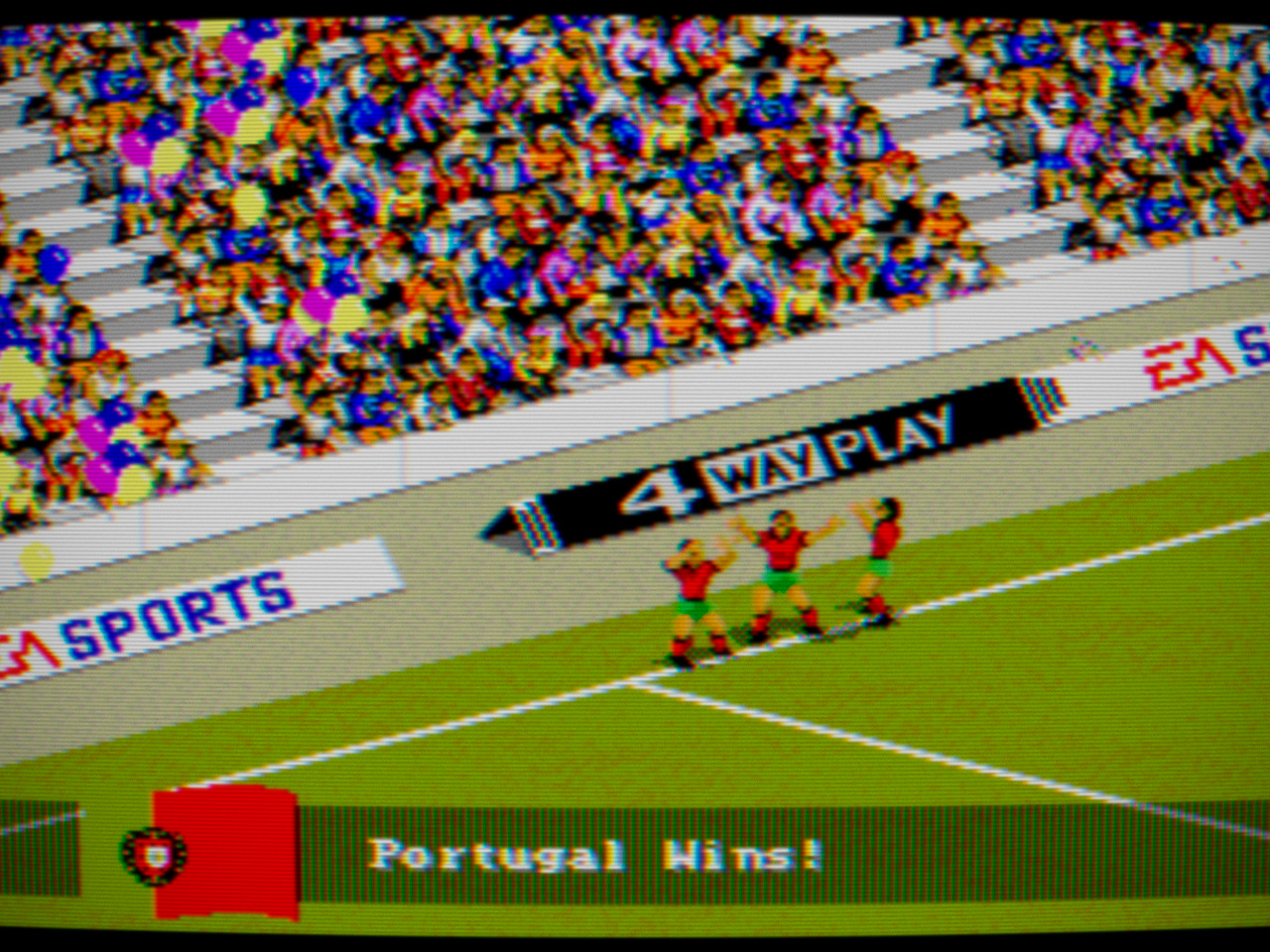
There are 48 national teams, and the gap between the best and the worst is wide. Germany, Italy, Holland and Brazil are among the heavyweights. Qatar are there to make up the numbers. The challenge comes from the teams you pick, so if the computer is too easy, choose a weaker side and suffer.
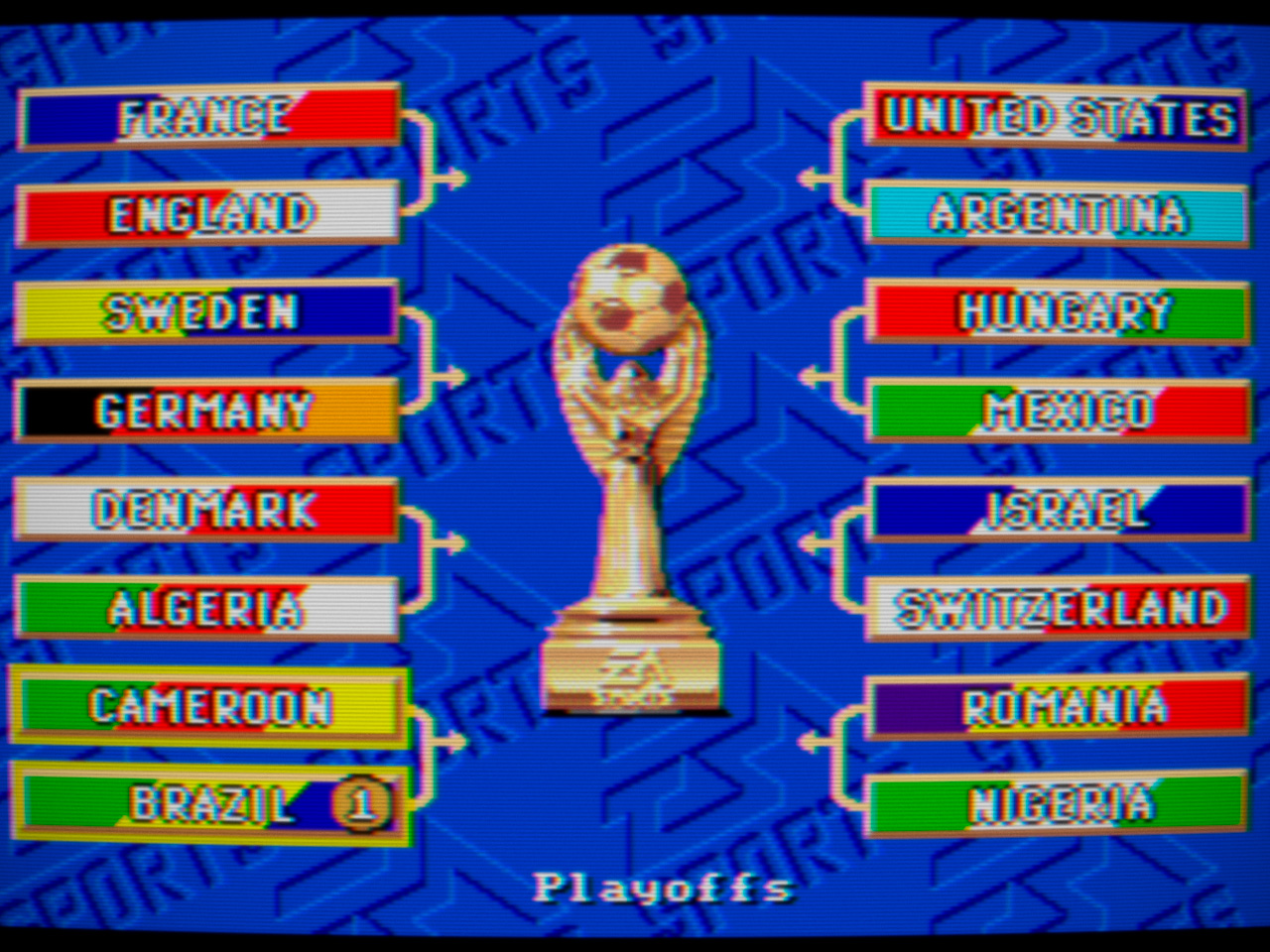
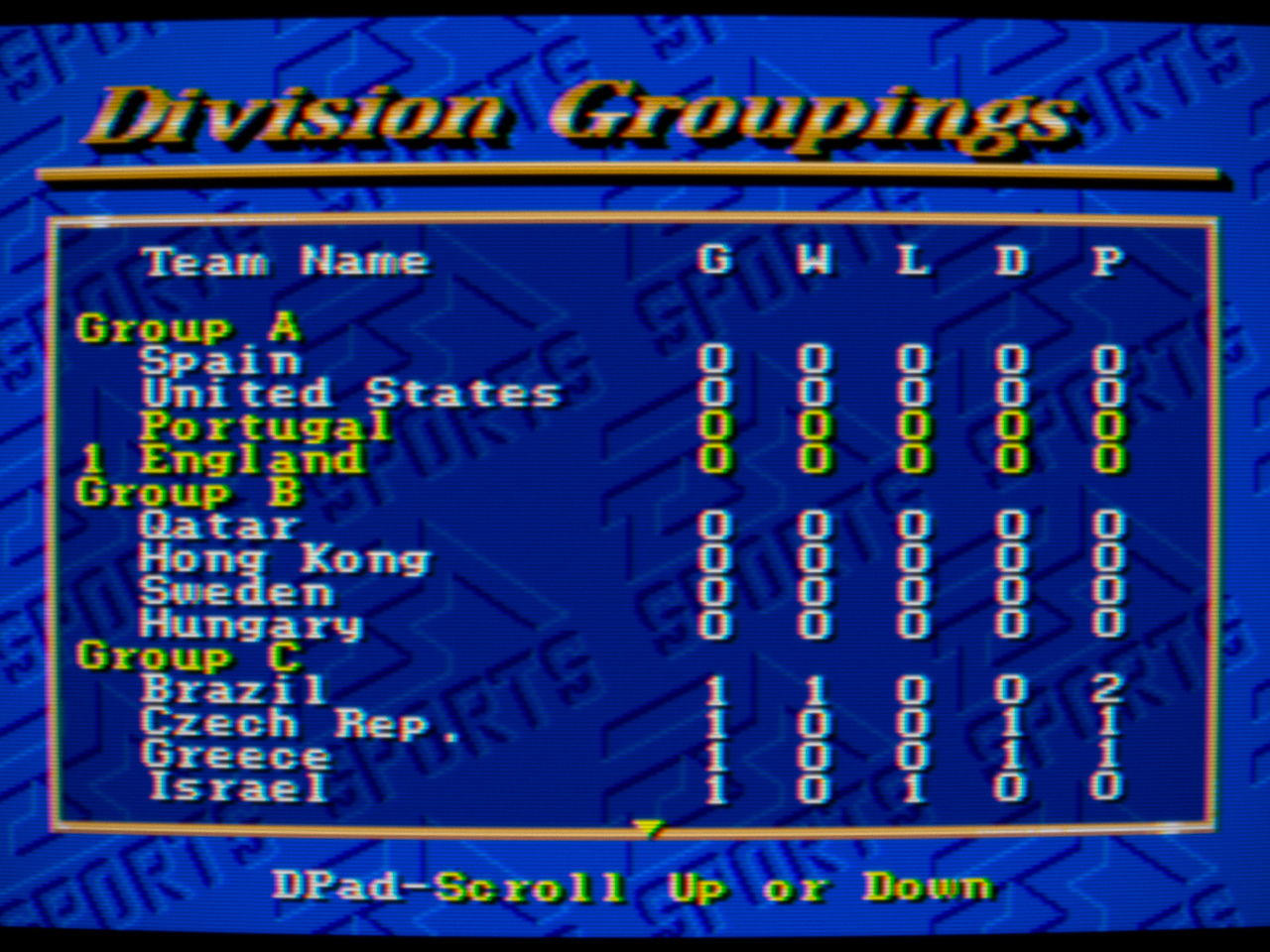
Beyond friendlies there are three competitions. Tournament is the World Cup in all but name: 24 teams in six groups of four, with the top two from each group and the four best third-placed sides going through to the knockouts. Playoffs skips straight to a knockout, with up to eight teams under human control. League puts eight teams through a season in which everyone plays everyone twice. A password saves your progress in all three.
Draws in the knockouts go to extra time and then sudden death. There are no penalty shootouts. England fans may find that a relief.
The noise
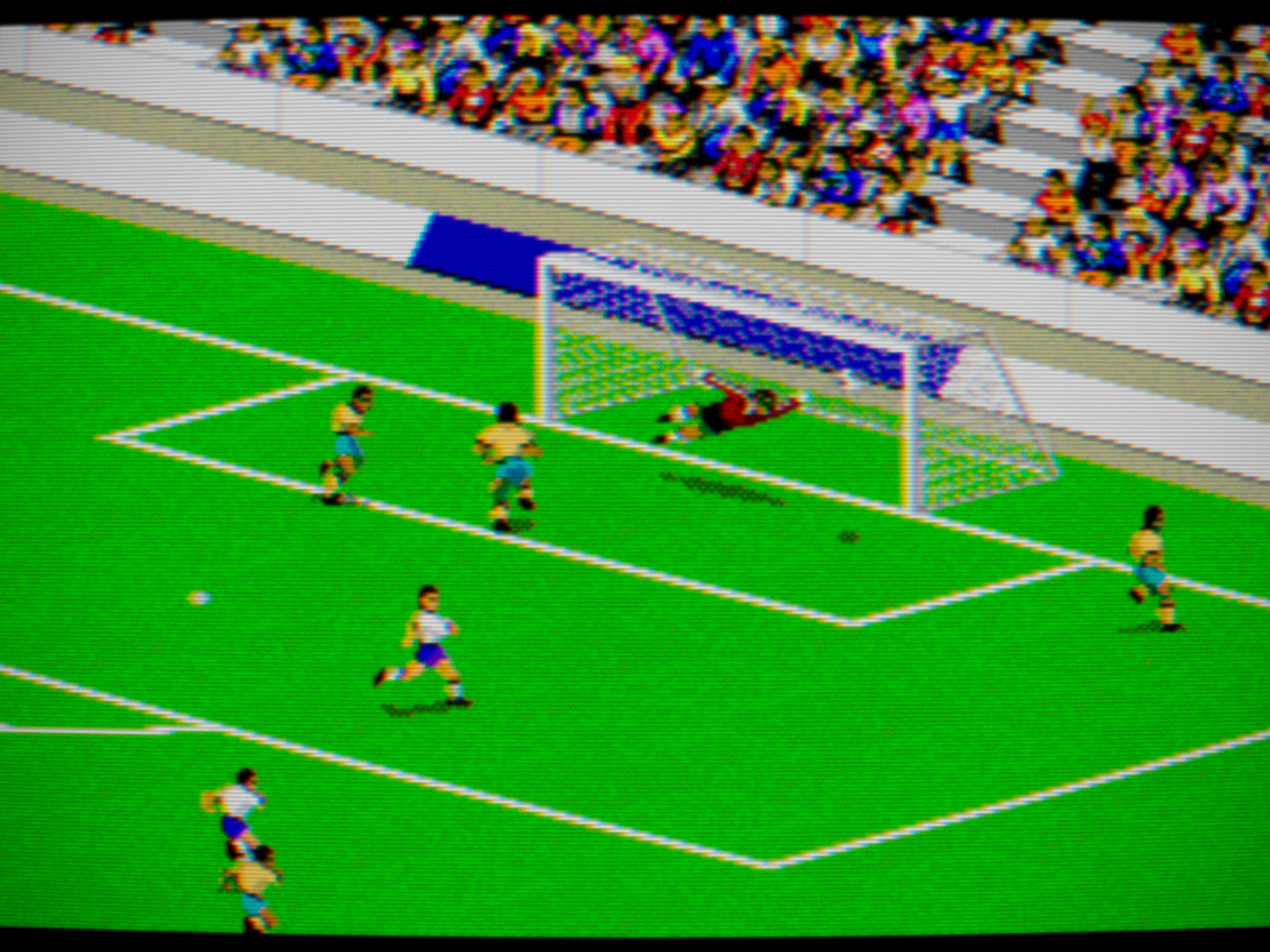
Sound is the other half of the atmosphere. The crowd never shuts up. There is a constant rumble that rises into cheers as a shot goes in and sinks into groans when it goes wide, with chants, songs and the odd chorus of boos on top. The thud of boot on ball sounds like a boot on a ball, which is more than some football games manage.
The music is by Jeff Dyck. It plays on the title screen and when you pause, and stays out of the way once the match kicks off. During play the crowd is the soundtrack, and it is the right call.
The cracks
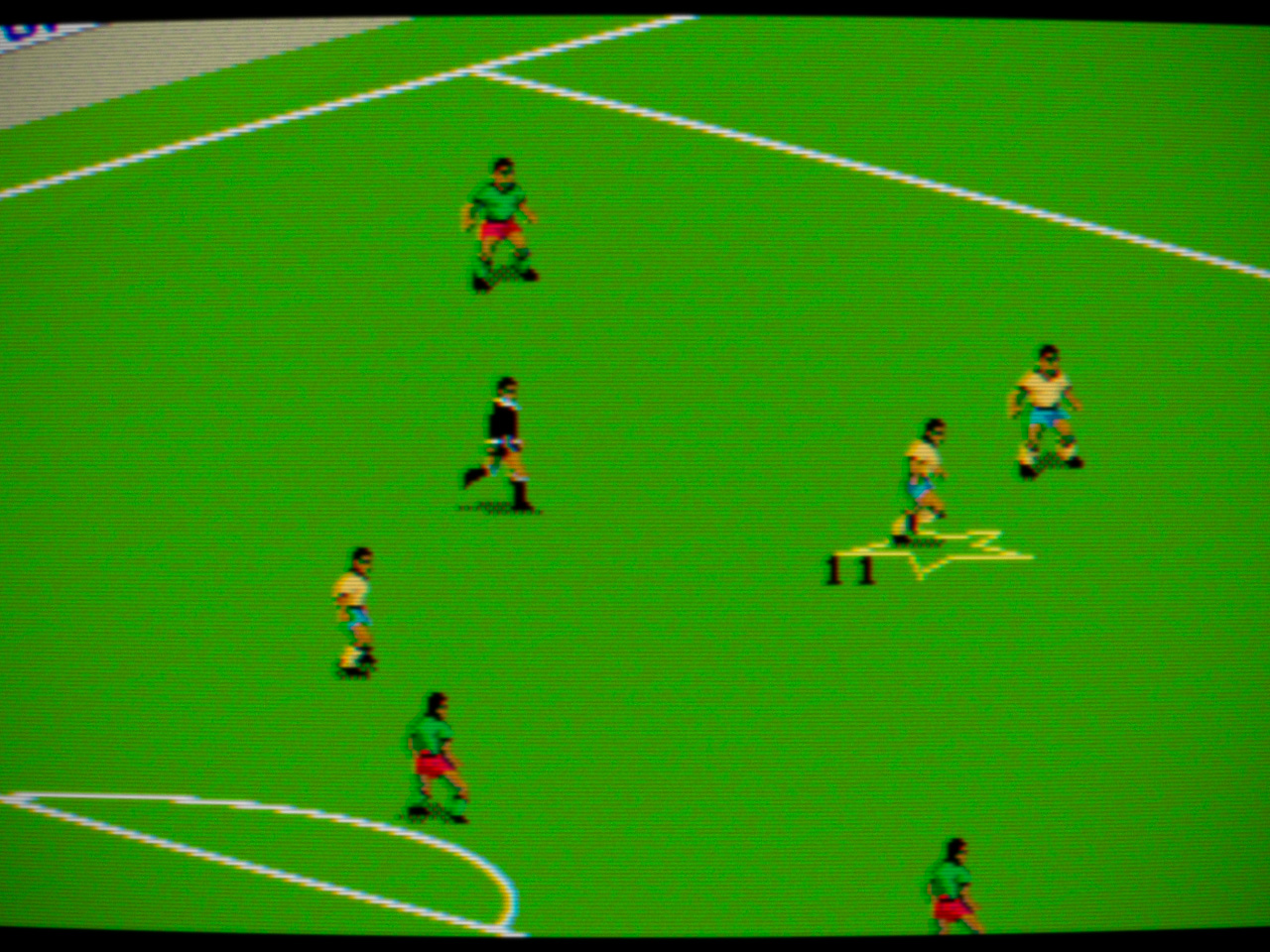
FIFA has faults, and they show up the more you play.
Scoring is odd. It is easier to beat a keeper from 40 yards than from four, and goalkeepers swing between brilliant saves and staring at a ball as it rolls past them. Players have a habit of trying a spectacular diving header when a side-foot would have done, and the ball ends up in the keeper's arms. With offside switched on, the computer's own players wander into offside positions for no reason anyone can work out. And now and then the players skate: their legs do fifty yards' worth of running while their bodies cover ten.
The bigger problem is passing. Try to string together a neat move of one-touch passes and the opposition will often close you down before it gets going. The tactic that works best is to hoof it forward and shoot from distance, which is fun but is not how anyone wants to remember their best goal. Control can feel loose too, as if the computer is making some of your decisions for you, and switching to the right defender when the ball is played towards your own goal is harder than it should be.
The players are made up, so you will not be scoring with your heroes.
The Verdict
FIFA International Soccer is a stunning football game. The isometric view makes it look like the telly and play like nothing else, the animation is the best on the system and the crowd gives every match a sense of occasion. The context-sensitive moves turn bicycle kicks and diving headers into something you can pull off without reading the manual. The tactics, formations and competitions give it depth, and four-player football makes it as good a party game as EA have made.
It has flaws. Goals from distance come too easily, the passing game is hard to make work and the goalkeepers have off days. None of them stops it being the most exciting football game on the Mega Drive.
On your own, it is a good game with a few frustrations. With mates, a 4-Way Play adaptor and a free evening, it is the best football you can buy.
In Hindsight
FIFA International Soccer was Electronic Arts' first go at football. It was made by Extended Play Productions, later known as EA Canada, and it began a series that ran under the FIFA name for three decades. Several things later football games treated as standard are here in early form: the broadcast camera angle, the stadium atmosphere and the idea that a football game should feel like a televised match as much as a contest.
It did not have the shelves to itself for long. Sensible Soccer reached the Mega Drive a week later, and the two were compared from then on. They could hardly have been more different. Sensible was played from above at breakneck speed and rewarded quick, precise passing. FIFA was slower, more physical and far more spectacular. Players who wanted the purer passing game went one way, and players who wanted the spectacle and the four-player chaos went the other.
Magazines scored FIFA highly on release and agreed on both its strengths and its faults. They praised the presentation, the animation, the crowd and the four-player game, and they pointed at the same weaknesses: goals from long range, erratic keepers and a passing game that rarely flowed.
Set against the football that came before it on the Mega Drive, the jump is enormous. World Cup Italia '90 gave you six-minute halves with no way to change them, no fouls and a single muffled shout for a soundtrack. Three years later, FIFA let you choose the match length, the referee's strictness, the weather and the pitch, and it filled the stadium with noise. That is how far football on this machine travelled in a short space of time.
The EA Sports formula, glossy television presentation wrapped around an accessible arcade game with a management layer underneath, had already worked for American football and ice hockey on this console. EA Hockey had shown it could win over a British audience that barely followed the sport. FIFA proved it could work for the sport British players cared about most. The scoreboard cartoon still plays every time you score.
Magazine scores
- Computer and Video GamesIssue 14592%
- EdgeIssue 28/10
- GamesMasterIssue 1291%
- Mean Machines SEGAIssue 1494%
- MegaIssue 1594%
- Mega ActionIssue 893%
- Mega Drive Advanced GamingIssue 1780%
- Mega MachinesIssue 289%
- Mega PowerIssue 594%
- MegaTechIssue 2492%
- Official SEGA MagazineIssue 192%
- SEGA PowerIssue 5089%
- SEGA ProIssue 2794%
- SEGA ZoneIssue 1493%
- VideoGames ShopperIssue 191%